Recovery services for mothers: Learning from Ridley Villas
Ridley Villas is a specialist supported accommodation project for women who are in recovery from addiction and their children, managed by Changing Lives in Newcastle.
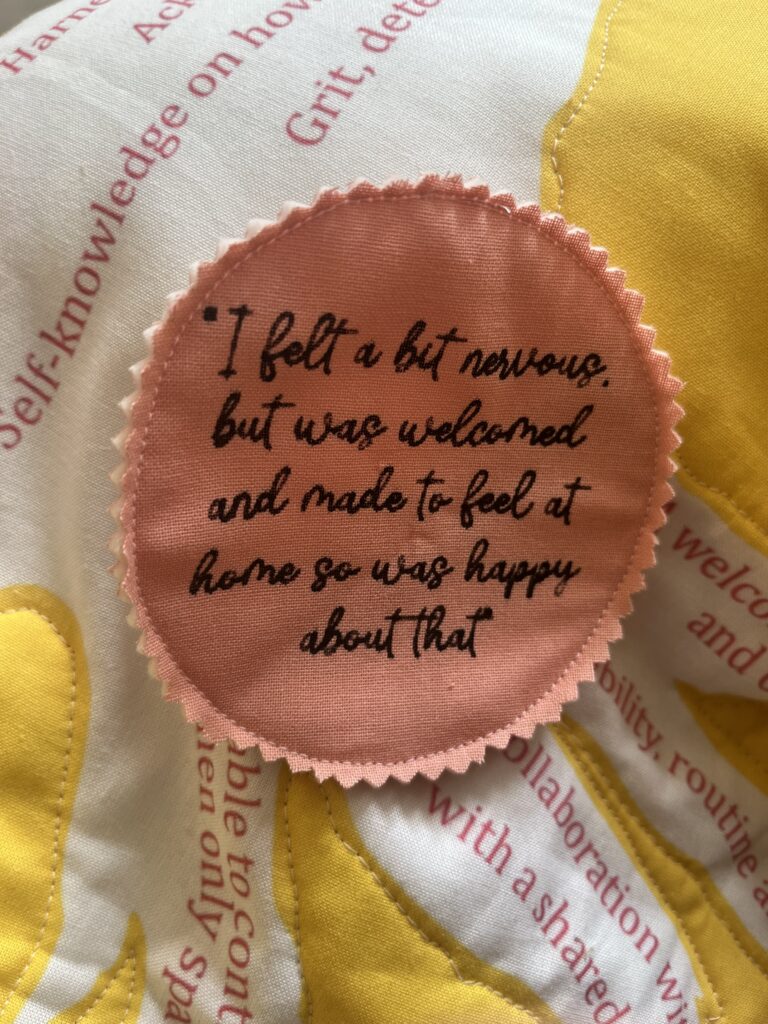
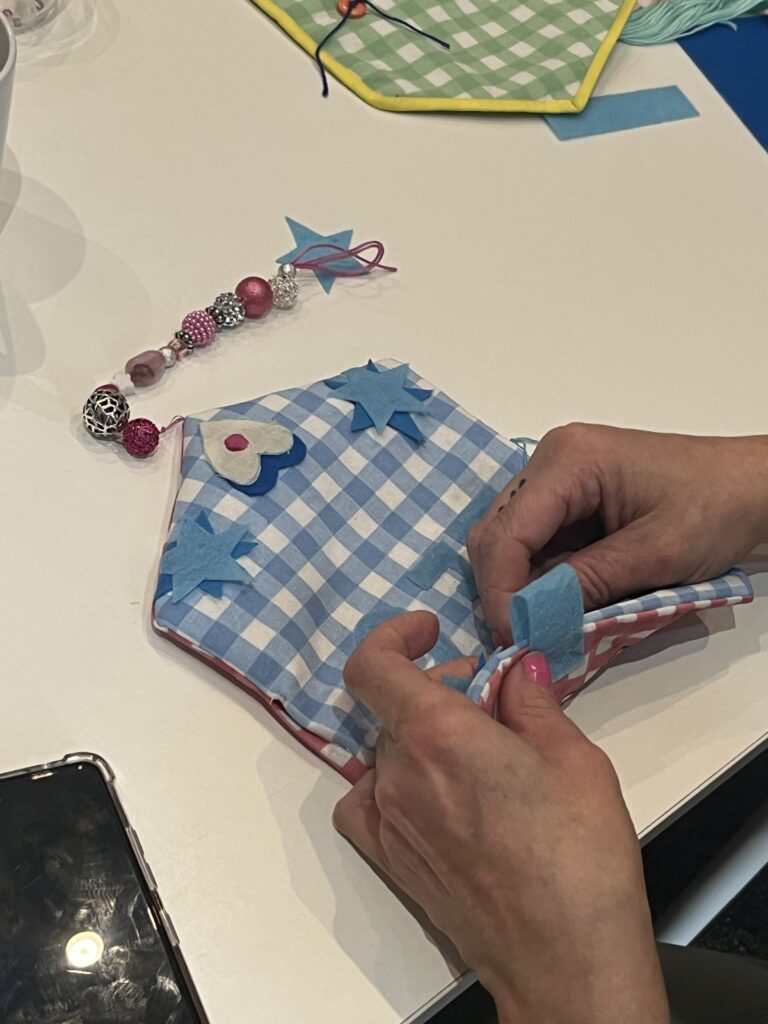
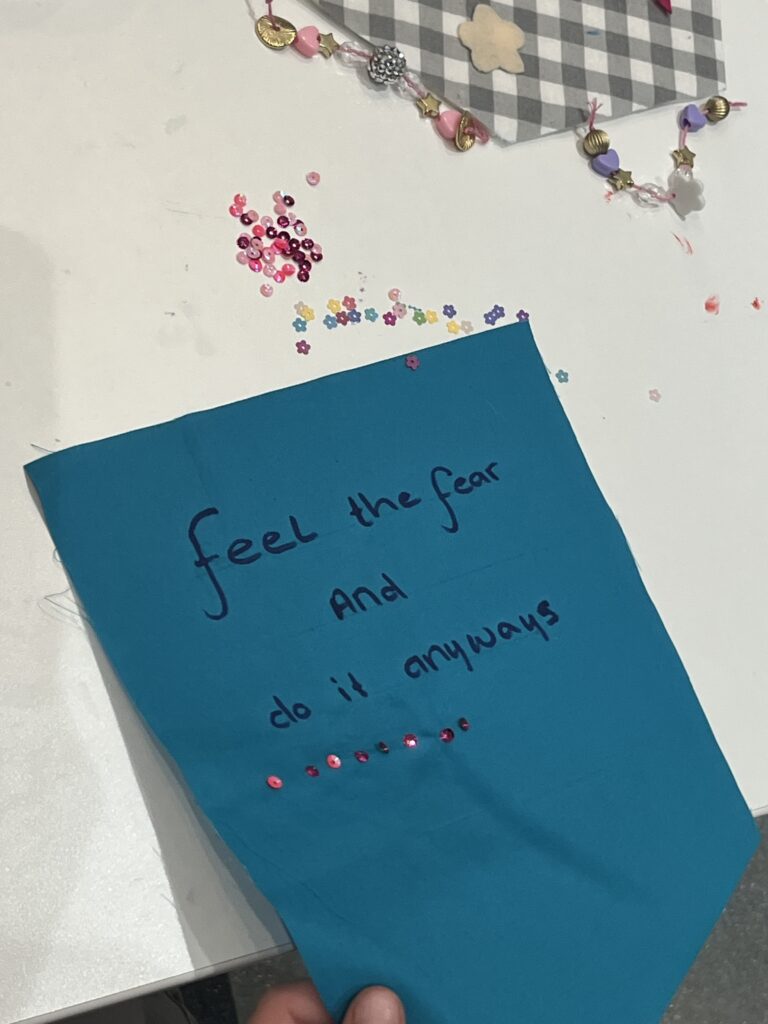
We worked with four residents at Ridley Villas to explore what made this specialist accommodation project different to others. We facilitated an 11-week programme with the women, which two of the women attended regularly. During this programme, we used a range of textiles techniques and materials to create personalised wall-hangings celebrating each woman’s individual journeys through motherhood and recovery.
Some of the key questions we asked during this part of the project was: What makes Ridley Villas unique? What makes Ridley Villas so successful? If we were to have the funding to create another Ridley Villas, what lessons canwe learn and what should be done differently?
Sources of Pride
During one of the workshops, we asked the women to pick a handful of beads from our collection. We then asked them to ascribe one thing they are proud of to each bead, and record this on a worksheet. Things the women were proud of related to their recovery processes, their journeys of healing from trauma, and their growing identities related to their motherhood. We produced a poster from the women’s experiences. The poster can be printed and hung up on an office wall, as a reminder of the kinds of things the women we support might be proud of; as a reminder to take an appreciative inquiry approach to our work.
Lessons Learnt from Ridley Villas
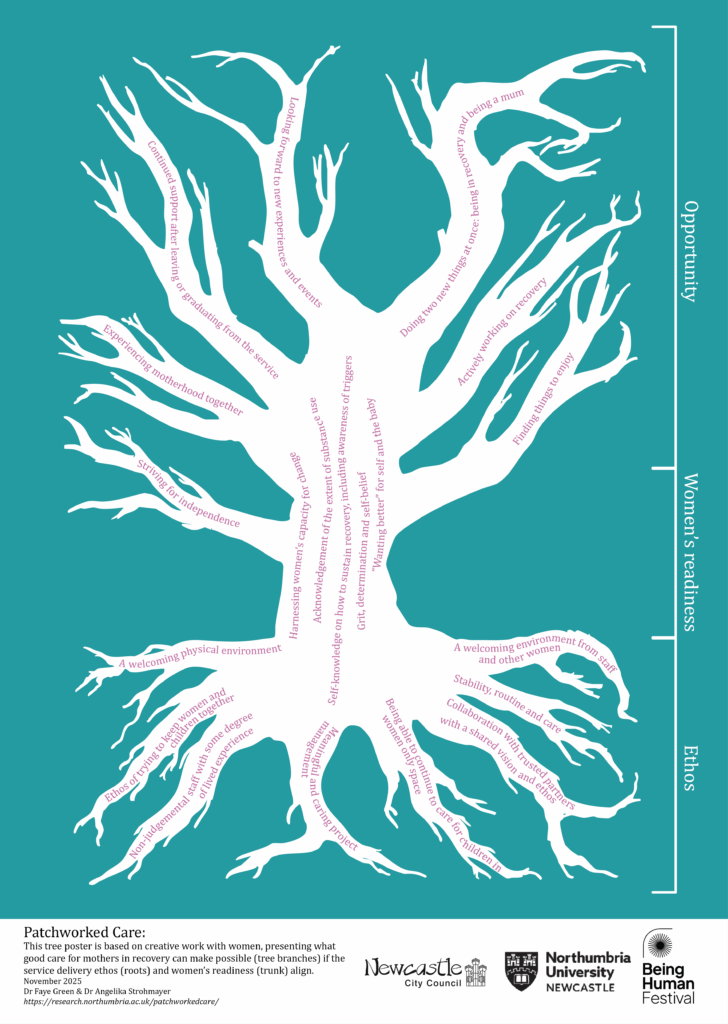
Women were very quick to tell us that Ridley Villas was different to other supported accommodation sites they had lived at. Over the eleven weeks, we often heard snippets of how Ridley did things differently, but it wasn’t until the end of the programme that we addressed this question in more detail. The women used the metaphor of a tree to represent their journeys of recovery and motherhood, talking about how support from professional services and peer support groups can lead to a strong ‘roots’ that can then be built on. The women reflected on how they needed to be ready to ask for and ultimately accept help, which we represent in the ‘trunk’ of the tree. Finally, the women reflected on what might be possible in the future if the roots and trunk of the tree are strong and healthy; creating new imaginaries of what might be possible beyond recovery. Download our poster to find out more.