
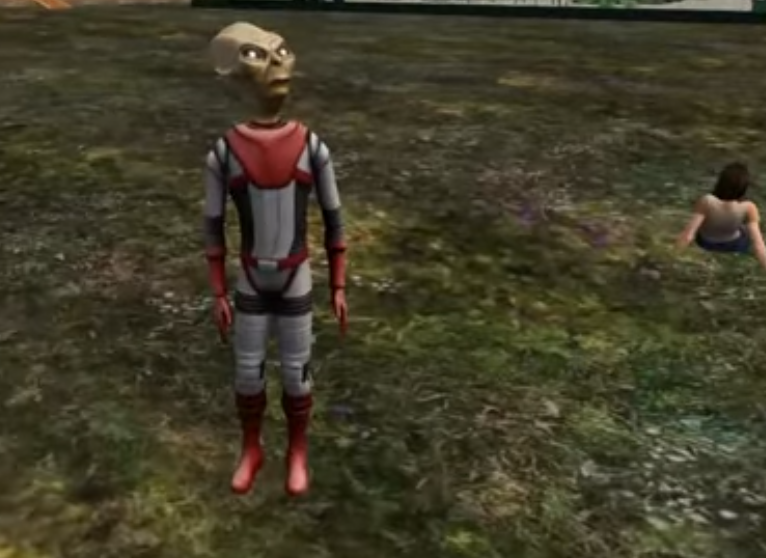
Last week I did a seminar at VWMOOC2025 – this is something I’m asked to do most years, I think because I’ve been around the community for long enough now I’m seen as a permanent fixture.
VWMOOC is a course created by Integrating Technology for Active Lifelong Learning https://integrating-technology.org/ and I think for a lot of participants is an opportunity to dabble in something metaversey for the first time. This year I did the workshop on three different projects, to tie in with their “10 ideas for humanity” series. The projects I spoke about were this one, then a series of webinars I’m doing on psychological safety in the workplace, and a third one I’m doing with Birmingham on teacher identities. The seminar is available on youtube at https://www.youtube.com/watch?v=jUO081cEsRk&list=PL8JUcjyABKxkqe7m1CghgXolyJpVAsHfI&index=6
The feedback on the playful learning section was interesting, which is why I’m sharing it here:
Although overall metaverses are intrinsically playful spaces so attract people who like to play, there were some reservations – comments like ” I have felt anxious and oppressed sometimes when people have forced us into playful activities that I did not find fun or playful” “I am careful about introducing play into my own teaching, interestingly one of my students with autism specifically said she hated playful activities in teaching” and “playful can be quite a subjective concept and culturally specific”.
All good points, and (my own biases showing here as I’m all for any sorts of play) not ones I’d properly considered. I think looking more at those tensions is something I’ll have to think about more. My response at the time was “i think it has to be co-created with the students – or ideally it is” which would help but isn’t always practicable.
Sheila Webber (who convened the session and invited me) sent me an email this morning with a quote from Caillois “A game which one would be forced to play would at once cease being play. It would become a constraint, drudgery from which one would strive to be freed” (Caillois, 2001, p. 6.) (the 1958 book republished) That book is Man, Play and Games. I haven’t checked out the 2001 edition but hopefully they corrected the gendered title that time round.
Overall though, really useful session to have done. Plenty of food for thought.
P.S. the image is of me – for the third part of the seminar I asked people to change to a skin to represent their identity as a practitioner. That’s the one I picked.
Interesting comments Mark. These reflect a study I did last summer which looked at (amongst other things) some of the reasons that students and staff are cautious about adopting playful learning. It’s online here: https://radar.gsa.ac.uk/9707/
I think these issues are really crucial to moving forward with playful learning and often not understood or just ignored by those of us who love play…