
A visit to Just In Tyne Escape Rooms with the IRES cohort
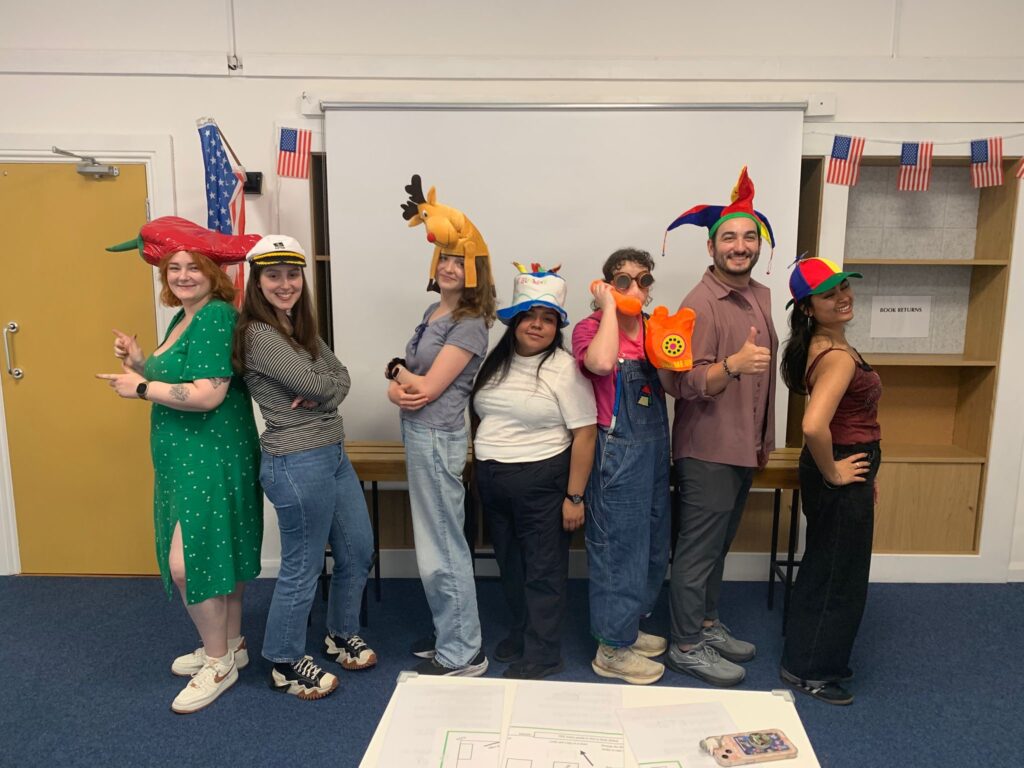
I’ve been working with a group of IRES (International Research Exchange Program) students this summer — visiting from universities across the United States — and a big part of what we’ve been chewing on together is what it might look like to teach people about climate change and sustainability through challenge-based, playful experiences. Not lectures. Not slideshows. Something that actually puts you inside the problem.
Nic suggested we try out an escape room! So off we went to Just In Tyne, where we’d booked the Breakfast Club room — a scenario built around escaping the principal’s office, complete with locker rooms, 1980s institutional dread, and a countdown clock. Exactly the right amount of chaos.
Why an escape room?
What I was watching for, as much as anything, was the structure of the small puzzles leading up to a big collective goal. At their best, escape rooms work through a set of small interlocking puzzles — each one satisfying in itself, each one feeding into something bigger — where the only way through is to actually collaborate. You can also do many of the puzzles in any order but come back to that collective goal, which for our outdoor context of exploring space is a must.
That’s the shape I keep coming back to when I think about climate and sustainability education. Not one enormous overwhelming problem presented to a passive audience, but a series of concrete, manageable challenges that build toward something larger. Puzzles that require different kinds of thinking, different types of play and roles that shift depending on what the moment needs. A goal everyone can see.
The Breakfast Club room isn’t about climate change. But watching the group move through it — watching who stepped up on which puzzle, watching people try things that might be wrong, watching the relief when something clicked — gave us all a shared language for the conversation we’re trying to have.
What I noticed
By the time we got out (we got out), the debrief almost wrote itself.
The questions I’m sitting with now are practical: what does it actually look like to design an escape-room-style experience around climate action that isn’t just a quiz with a padlock on it? How do you make puzzles that carry real content without the content killing the play? What’s the difference between a game that tells you about a problem and one that puts you in the position of someone trying to solve it?
I don’t have clean answers yet. But the visit gave us a shared reference point, and that’s been worth a lot in the conversations since.