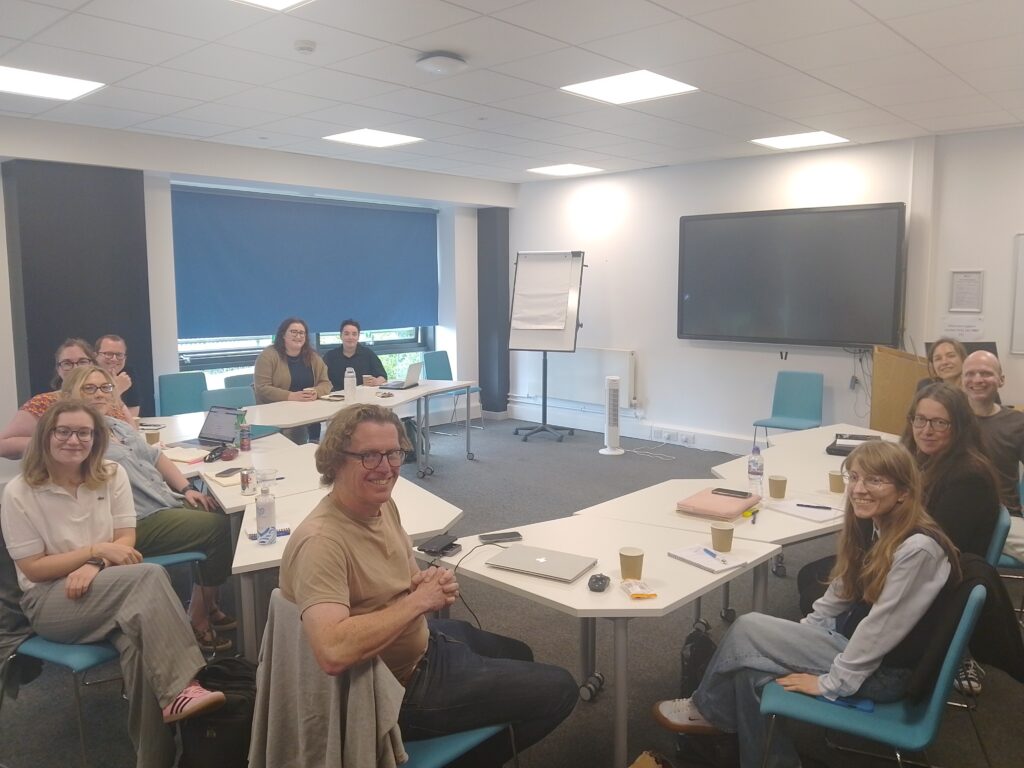
On 29 May, the “Histories of Activism” research group at Northumbria University collaborated with the GLO project in hosting a work-in-progress workshop on the subject of “Educating for Peace, 1920s to 1960s”. The event featured three papers as well as lots of lively discussions.
Emily Calcraft (PhD candidate at the University of Sheffield) discussed “Physical Education, Youth and Activism in Interwar Britain”. Drawing on the records of various groups (including the No More War Movement and the Peace Pledge Union), she covered pacifist critiques of the Cadet Corps and of other forms of military training in schools. At the same time, she also highlighted pacifists attempts to promote alternative models of physical education, drawing attention to the work of the New Education Fellowship.
Elisabeth Teige (Senior Lecturer in History at Volda University College) connected the interwar and post-1945 period in her paper on UNESCO’s “Education for International Understanding” programme. In considering the programme’s genesis in 1947 and its subsequent development, she also highlighted threads that connected UNESCO’s work in that field to interwar initiatives in this domain.
Finally, Sophie Scott-Brown (Honorary Research Fellow at the University of St Andrews and a Research Fellow of the GLO project) discussed “Peace, Pedagogy, and Strategy in British Early Cold War Anti-Nuclear Activism”. Her paper explored what the Gandhian concept of Satyagraha meant for British activists during the 1950s, using a case study of the Aldermaston Picket, which the Direct Action Committee organized from July to September 1958.
Taken together, these papers, as well as the discussions throughout the afternoon, highlighted the importance of education both as a field of action for peace activists and as a terrain on which different visions of internationalism and global governance materialized.