
Author: Angela Paul
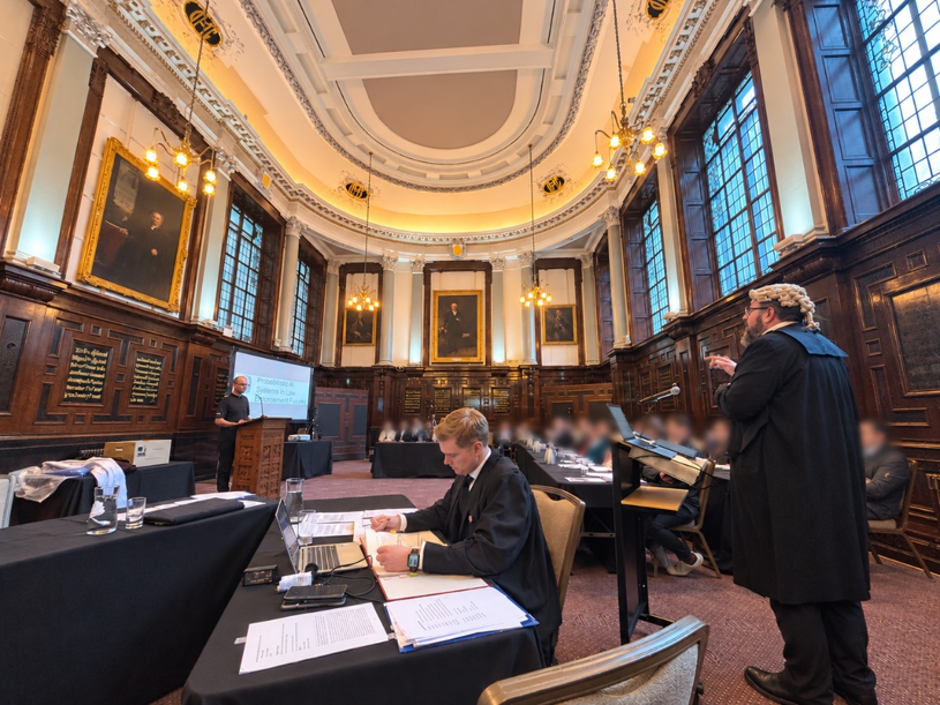
Pictured: The defence advocate questioning the police witness.
The Responsible AI UK-funded PROBabLE Futures Project, led by Northumbria University with Newcastle, Glasgow, Northampton, Leicester and Cambridge Universities, held its first mock trial at the Merchants House of Glasgow on the 11th and 12th of November 2026.
Initial thoughts following the trial: be careful what you wish for, using AI might not be as helpful as you think!
Executive Summary:
- Our mock trials look at what will it mean for justice when AI-based evidence becomes mainstream in our criminal courtrooms. The second mock trial will take place in Newcastle Upon Tyne in March 2027.
- Our research questions revolve around: how does probabilistic AI output become legally usable evidence across the stages of a criminal case; how do jurors understand and deliberate over it; and what do the tensions between AI’s probabilistic reasoning and criminal procedure reveal about what explainability means in an adversarial court?
- Overall, the mock trial has highlighted some of the key issues associated with introducing AI-generated evidence in a criminal trial. The concepts associated with probabilistic AI tools, including confidence levels and thresholds, were not straightforward to present in court and explain to the jury. The trial also highlighted the importance of assessing AI outputs for accuracy.
Preparing for the Trial
Ahead of the trial, a short preliminary hearing was held online on the 6th of November 2026, with the judge and counsel. The preliminary hearing was held to make the trial process as authentic as possible, and also to explore how the AI-based evidence was dealt with by the legal professionals during this hearing. The judge, counsel and the expert witness also completed pre-trial questionnaires online. There was also a conference call between the prosecutor and the expert witness held online, which has been transcribed for analysis.
We spent several months designing the process for the two trial days, ensuring both ecological validity and an effective research strategy. The scoping review we conducted of previous mock trial studies helped us create and visualise the design strategy most appropriate for answering our research questions. Running a mock trial carries significant time and cost implications, and we developed a comprehensive strategy to address them.
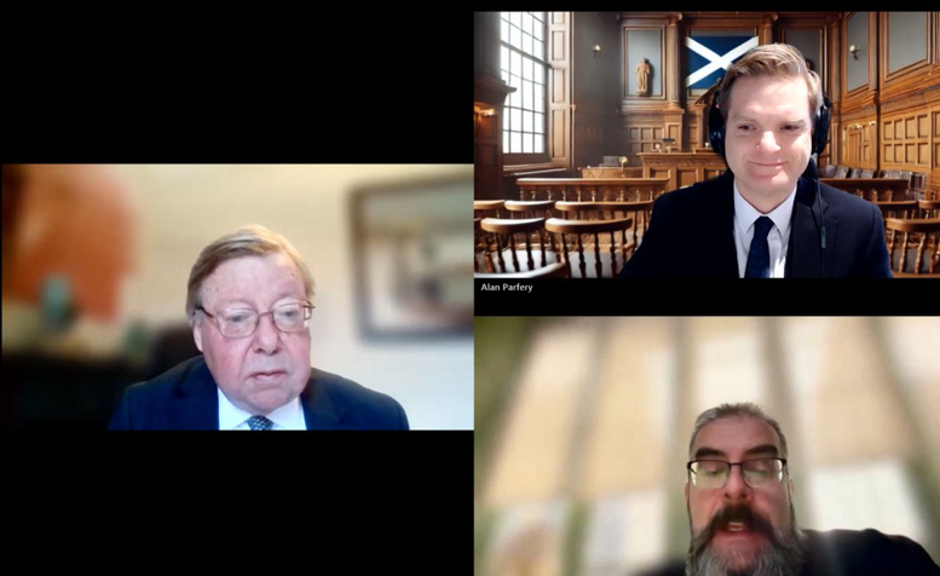
Pictured: A screenshot from the preliminary hearing. Left side: Colin Sutherland, Lord Carloway, the judge. Top right: Advocate Depute Alan Parfery (prosecution) and Advocate Tony Lenehan, KC (defence).
Trial Day 1
The morning of the trial began with the cameras and microphones being set up throughout the court ready for data capture. We welcomed the 15 jurors, who had been recruited via FieldMouse Research. As the jurors arrived, they were given a pre-trial questionnaire, juror guidance, health and safety guidance, a notebook and a juror ID number on their lanyard.
The first day of the trial was when all the evidence was presented. The jurors were sworn in, and the indictment was read out by the clerk (a project member), the trial then started with the judge’s preliminary remarks. The fictional case involved a robbery, and the jurors heard evidence from witnesses, props were held up, an audio that was played, and images were displayed on screen. The first two witnesses who were examined in the trial were two eyewitnesses (played by actors). A serving police officer, Sergeant Jason Logsdon, acted as the fictional police officer in the case. The final witness to be called was Dr Reuben Moreton, an expert in forensic facial identification and biometric systems, who joined via live video-link. The actor playing the accused was present but did not give evidence. The evidence in the case included AI-generated transcripts, AI-generated witness statements, the output from a retrospective facial recognition tool, DNA evidence, a CCTV screenshot, and items that were seized from the accused’s house. The prosecution also provided the jury with a joint minute of agreement.
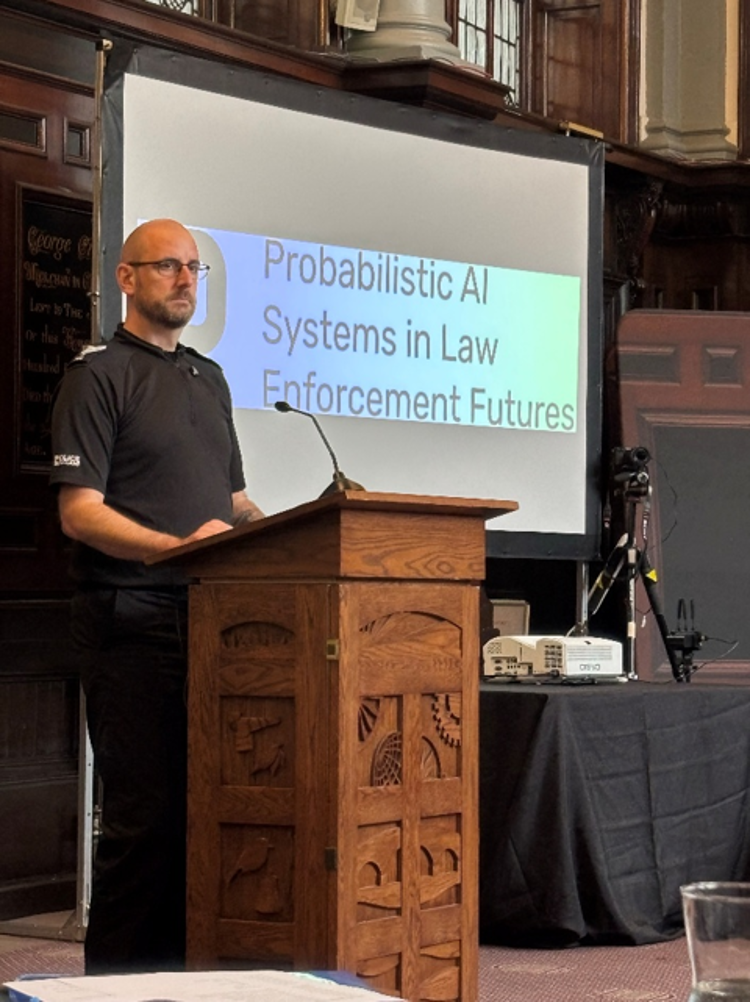
Pictured: Sergeant Jason Logsdon, Chief Data Office, Police Scotland giving evidence.
Trial Day 2
The second day of the trial began with brilliant closing speeches from the prosecution and the defence. It should be noted that the advocates were not prompted to take their arguments in a particular direction. The advocates were told to treat the case materials as though this was a real case. The morning session concluded with the judge’s instructions to the jury, and the jury were given copies of any relevant evidence to consider during their deliberations. The deliberations began after the morning break, and they were given 2 hours and 30 minutes to deliberate together. The deliberations were video and audio recorded. During the deliberations, the judge and counsel were interviewed by the research team. This was followed by a short verdict hearing, after which the trial concluded. The jurors were then given post-trial questionnaires to answer.
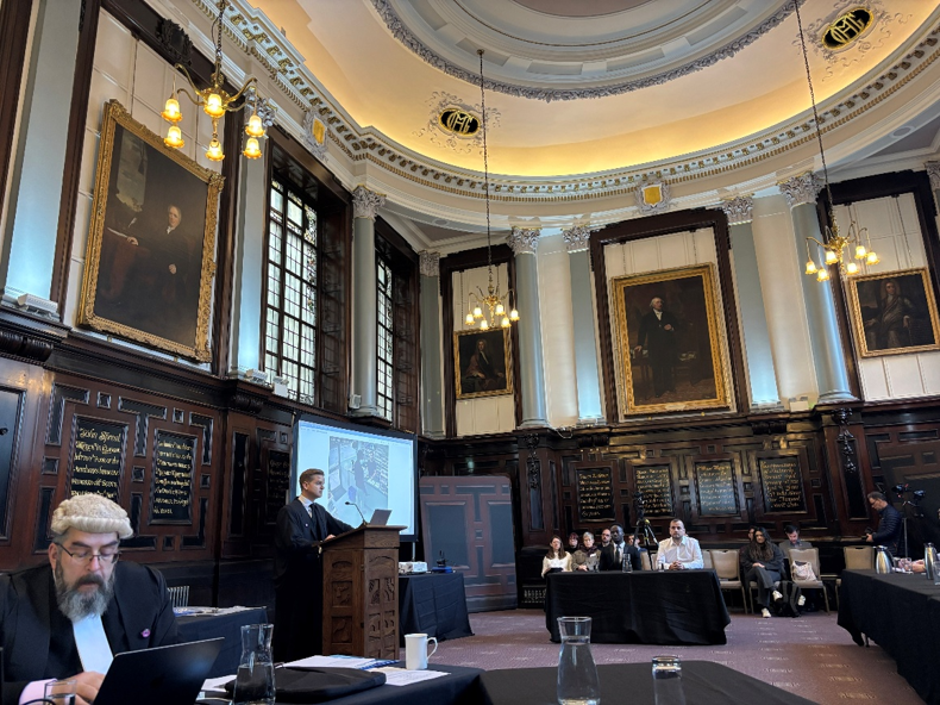
Pictured: Closing speeches.
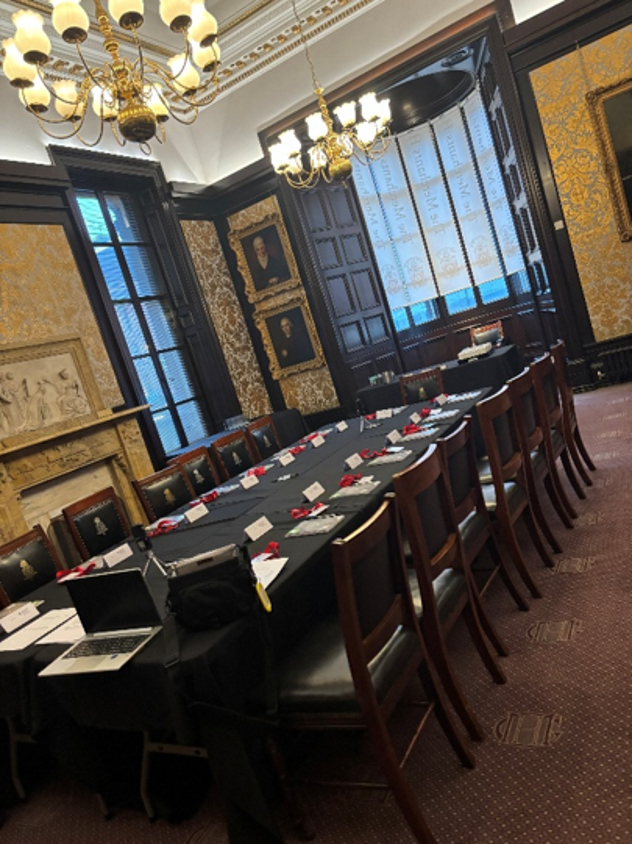
Pictured: The Jury Room.
What happens now?
The mock trial provided a wealth of data which will be analysed by the research team. The results will be published in the form of policy briefs and academic publications. Follow this website and our LinkedIn page for updates.
Key individuals involved
The judge: Lord Carloway
The prosecutor: Advocate Depute Alan Parfery
The defence advocate: Tony Lenehan, KC
The actors: Kema Sikazwe, Benjamin Storey and Lucy Doig
Police witness: Sgt Jason Logsdon
Expert witness: Dr Reuben Moreton
Scottish criminal procedure expert: Andrew Richardson, COPFS
Case advisors: Katherine Dunn (Assistant Professor, Northumbria Law School) and Lisa Callum (Clinical Supervising Lawyer, Northumbria Law School)
The Mock Trial Research Team:
Prof Kyle Montague, Northumbria University
Dr Elizabeth McClory-Tiarks, Newcastle University
Dr Angela Paul, Northumbria University
Dr Mackenzie Jorgensen, Northumbria University
Dr Evdoxia Taka, University of Glasgow
Dr Katherine Jones, Northumbria University
Prof Marion Oswald (Principal Investigator), Northumbria University
Dr Kyriakos Kotsoglou, Northumbria University
Dr Claire Paterson-Young, University of Northampton
Dr Michael Maher, University of Northampton
Project Manager: Laura Gower
Project Coordinator: Natalie Dudding
PhD students at Northumbria University provided support on the trial days: Aleeyah Mahmood, Nneoma Ogbonna, Bobby Ramsey
AI Disclaimer: Anthropic’s Claude AI, model Opus 5.5 Medium, was used only to correct grammar on this blogpost. The blog itself was written by the author.